Connecting Hakone Ropeway and Lake Ashi Sightseeing Cruise
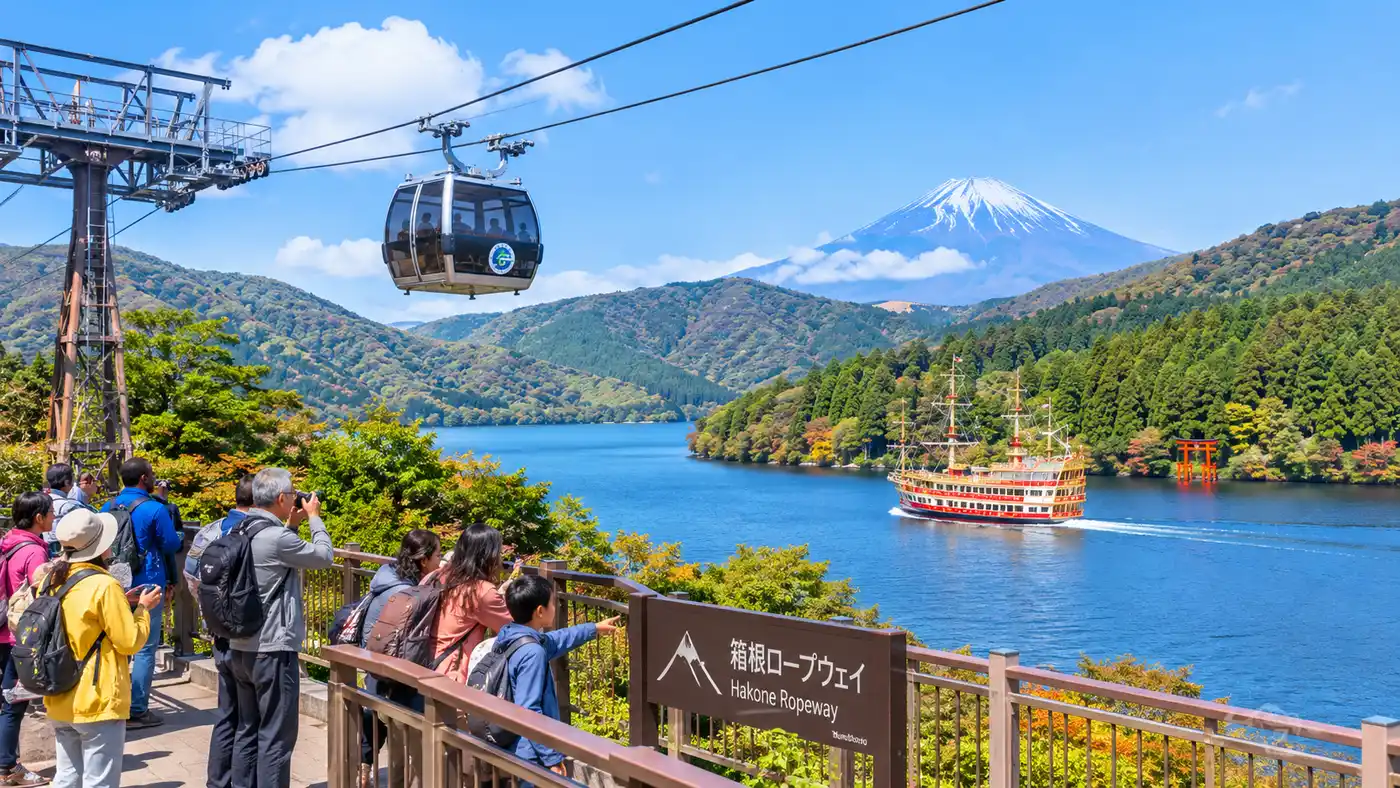
There is a specific moment at Togendai Station when you walk out of the gondola cabin, take an escalator down two flights of stairs, and immediately stare at a full-sized 17th-century European warship bobbing on a volcanic lake. It feels completely absurd. You spent the last twenty minutes gliding above steaming sulfur vents in an alpine landscape, and suddenly you are boarding a galleon with golden lion figureheads. Yet navigating the connection between the hakone ropeway and pirate ship is the single most rewarding stretch of travel in the entire Kanagawa prefecture if you get the timing right.
Most travelers stumble through this interchange because guidebooks make it sound like a synchronized train schedule. It is not. Wind storms shut down the ropeway without warning, cruise boats run on seasonal timetables that do not always match the gondola arrivals, and tour crowds can turn an eight-minute transfer into a forty-minute crawl. This guide walks through how the connection works, how to route your day smoothly, how the ticketing works, and what to actually expect once you step off the cables and onto the water.
Book your hakone ropeway experience:
The Togendai Interchange: Moving from Cable to Water
Togendai Station is the physical joint of the Hakone transit loop. The building itself is a multi-level concrete terminal sitting right on the northern shore of Lake Ashi. When your ropeway gondola descends from the final ridge past Ubako, you look straight down over the water. The cabins pull into the second floor of the station. Once you exit through the ticket wicket, you are already inside the same complex as the boat pier.
You do not need to walk outside in the rain or drag your bags across a parking lot. You simply follow the overhead signs down to the ground floor and basement level. The basement houses the ticket counters, gift shops, coin lockers, and the gangway that leads directly to the docks. If there is no line at the ticket gate, you can literally walk from your ropeway cabin onto the open deck of a ship in under five minutes.
Reality rarely plays out that cleanly in the middle of the day. Between 11:30 AM and 2:30 PM, tour buses dump hundreds of day-trippers into the Togendai parking lot just as morning ropeway passengers arrive from Owakudani. The terminal corridors bottleneck quickly around the restrooms and ticket wickets. If you need to break up the journey, the Togendai View Restaurant sits right on the lake level. The food is standard fare - think pork cutlet curry and soba - but the floor-to-ceiling windows look straight out over the dock, letting you watch the boats load while you eat.
Pro tip: If you see a massive queue forming inside the Togendai terminal hall, look for the boarding lanes marked by line color; standard ticket holders queue on the left, while first-class ticket holders board from a separate, often empty lane on the right.
If you are planning your overall route across the mountain, make sure to read our detailed Hakone Free Pass Golden Loop itinerary to see how this transition fits into a full-day schedule.
Choosing Your Direction: Clockwise vs Counter-Clockwise
The standard way to do this trip is counter-clockwise. You start in Hakone-Yumoto, take the mountain railway to Gora, ride the funicular to Sounzan, take the ropeway over Owakudani down to Togendai, and then sail across the lake to Moto-Hakone before bussing back down to Yumoto. This direction has one major advantage: the suspense. You climb the mountain through volcanic fumes, hit the high point, drop down to the water, and end with a tranquil cruise across Lake Ashi.
Doing it backwards - clockwise - has quietly become my preferred choice, especially on weekends. Catching an early morning bus straight from Hakone-Yumoto up to Moto-Hakone lets you board the first boat of the morning heading north to Togendai. You cross an empty lake with morning mist hanging over the cedar trees, and you reach the ropeway just as the crowds going counter-clockwise are still stuck eating black eggs at Owakudani. You sail northward, step right onto an empty ropeway cabin, and pass thousands of travelers queuing in the opposite direction.
The wind determines everything out here. Lake Ashi sits in a caldera bowl at an elevation of 723 meters. When mountain fog rolls in or wind gusts pick up above 20 meters per second, the ropeway stops running long before the pirate ships cancel their sailings. Before you lock in your direction for the morning, check our guide on Hakone Ropeway weather status and closures so you do not end up stranded on the lake with no overhead cabins running back up the ridge.
Here are the practical logistics you should consider before picking your direction:
- Counter-clockwise travel: delivers dramatic views of Mount Fuji appearing suddenly as your gondola crests the sulfur valley ridge above Owakudani.
- Clockwise travel: avoids the worst morning crowds at the Hakone-Tozan switchback railway and lets you board boats with hundreds of open seats.
- Sun position: counter-clockwise gives you afternoon light on the floating torii gate at Hakone Shrine when your boat approaches Moto-Hakone.
- Luggage logistics: sending bags ahead via the Hakone baggage service at Yumoto Station works equally well in both directions.
The Fleet and the Ports: Where the Cruise Takes You
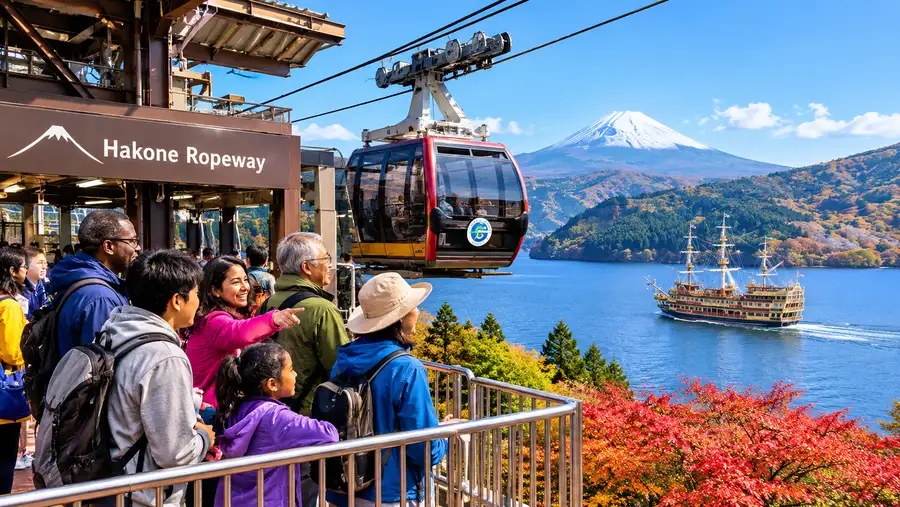
Three pirate ships currently operate across the lake: the Royal II, the Victory, and the Queen Ashinoko. The Queen Ashinoko is the newest, designed by Eiji Mitooka - the same industrial designer who created the luxury Seven Stars train in Kyushu. Its interior features intricate wooden latticework, parquet floors, and brass fixtures that look far more like an upscale parlor car than a cartoon boat. The Royal II leans heavily into French Baroque decor with faux cannons and painted ceilings, while the Victory takes inspiration from British warships.
From Togendai, the ships sail south toward two distinct piers at the southern end of the lake: Hakonemachi-ko and Motohakone-ko. Many first-timers do not realize that the boats do not simply run back and forth between two points; they operate in a triangle. A boat leaving Togendai usually stops first at Hakonemachi-ko, lets off passengers, and then sails another ten minutes along the shoreline to Motohakone-ko before returning north.
Note: Not every single boat stops at both southern piers in the late afternoon; check the pier display board before scanning your pass to confirm if your departure docks at Hakonemachi first or goes directly to Motohakone.
Which port you choose depends entirely on what you want to see next. Hakonemachi-ko puts you right beside the historic Hakone Checkpoint and the preserved Cedar Avenue, where travelers during the Edo period were inspected along the Tokaido road. Motohakone-ko is where you alight to visit the famous lakeside torii gate of Hakone Shrine. Walking between the two southern ports takes roughly 22 minutes along a paved, flat trail shaded by massive cryptomeria trees, so picking the wrong pier is rarely a disaster.
| Route Segment | Transit Time | Regular Fare (Adult) | Key Highlight Along the Way |
|---|---|---|---|
| Togendai to Hakonemachi-ko | 25 to 30 minutes | 1,200 yen | Wide panorama of Mount Fuji behind the western rim |
| Hakonemachi-ko to Motohakone-ko | 10 minutes | 420 yen | Passing close to the floating red torii gate |
| Togendai to Motohakone-ko (direct/via) | 35 to 40 minutes | 1,200 yen | Full traverse of Lake Ashi from north to south |
| First Class Deck Upgrade (one-way) | Duration of ride | 600 yen | Private forward viewing deck, plush seating, fewer crowds |
Book your hakone ropeway experience:
Tickets, Free Pass Inclusions, and the First-Class Upgrade
If you bought the Hakone Free Pass, both the ropeway and the Lake Ashi pirate ship are fully covered. You do not need to buy paper tickets at either counter. You simply present your physical pass or show your smartphone digital ticket QR code to the station attendant at the gate. The convenience is enormous; skipping ticket counter lines saves you 15 to 25 minutes during peak holiday travel.
However, the free pass covers only standard class on the sightseeing cruise. Every boat in the fleet divides its deck space into two zones. The lower decks and aft areas belong to standard class. The front third of the boat, along with the elevated bow deck and private lounges, is reserved for first class. To enter this section, you pay a modest surcharge of 600 yen for adults or 300 yen for kids at the onboard purser desk or at the pier window.
Is that extra 600 yen worth spending? Honestly, yes, especially between April and October. Standard class decks get packed shoulder-to-shoulder with selfie sticks and tour groups. Finding an open bench outside can be impossible if you board late in the queue. The first-class area restricts passenger numbers, meaning you get unobstructed views over the ship bow, cushioned wingback chairs indoors, and space to actually move your arms while taking pictures of the mountain reflections.
If you are traveling without a pass, buying point-to-point tickets is expensive. A one-way ropeway ticket from Owakudani to Togendai costs 1,550 yen, and the one-way boat cruise costs 1,200 yen. Combine those with mountain bus connections, and you will exceed the daily cost of a multi-day pass within four hours of arrival.
What You See from the Deck: The Mountain and the Shrine
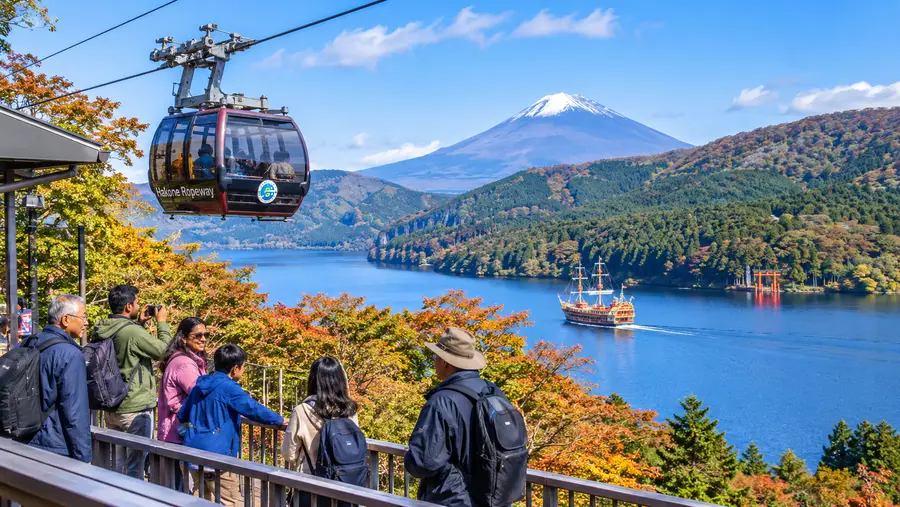
The boat ride takes roughly 35 minutes from Togendai to Motohakone. As soon as the ship unties from the dock and swings into open water, head out to the port side deck if you are cruising south. On clear days, Mount Fuji rises dramatically behind the mountain ridges flanking the lake. The view changes constantly as the boat moves through the water, with the volcanic peak appearing between saddle points in the hills.
The southern end of the lake holds the most famous view in Hakone: the Heiwa no Torii (Torii of Peace). The vermilion gate stands knee-deep in the water at the base of dense cedar woods, marking the water approach to Hakone Shrine. From the deck of the boat, you pass within a couple hundred meters of the structure. It gives you a perspective that travelers standing in the two-hour photo line on the shore never get: the shrine gate dwarfed by the ancient forest behind it.
Here are several details worth watching for during the crossing:
- Mount Komagatake: the tall, rounded peak towering over the eastern shore, topped by the miniature silhouette of the upper ropeway station and Hakone Motomiya shrine.
- Kuzuryu Shrine: a quiet, secluded sub-shrine hidden in the trees along the northern shore, visible as small red gates right on the water line.
- Black bass anglers: Lake Ashi is famous in Japan for sport fishing, and you will glide past dozens of small aluminum rowboats anchored near drop-offs.
- Mount Fuji reflections: on rare windless mornings, the lake surface turns into glass, creating a reverse reflection of the mountain known locally as Sakasa Fuji.
The air on the water is noticeably colder than in Tokyo or even Hakone-Yumoto down in the valley. Even in the middle of summer, lake breezes kick up spray across the open decks. If you plan to spend the thirty-minute crossing outside on the top deck rather than behind glass in the lower cabin, keep an extra outer layer accessible in your daypack.
Frequently Asked Questions about hakone ropeway and pirate ship
How long does the whole connection take between Owakudani and the south shore of the lake?
Plan for roughly 75 to 90 minutes total. The ropeway ride down from Owakudani to Togendai takes about 18 minutes. The transfer walk through the terminal takes 5 to 10 minutes. The pirate ship cruise from Togendai across the lake to Motohakone-ko takes roughly 35 to 40 minutes, plus any queueing time before boarding.
What happens if the ropeway shuts down due to high wind?
Replacement buses run between Sounzan, Owakudani, and Togendai when the ropeway cannot operate safely. The Hakone Free Pass covers these replacement buses. You will still be able to reach the boat pier at Togendai, though bus routes take longer due to narrow mountain switchbacks.
Can I bring large rolling luggage onto both the ropeway and the cruise boat?
Yes, but it is cumbersome. The ropeway cabins fit luggage easily between the bench seats, and the cruise ships have open floor areas for strollers and suitcases. However, maneuvering large bags through the multi-level transfer stairs at Togendai is tiring. Using the luggage forwarding service at Hakone-Yumoto Station to send bags straight to your ryokan is much easier.
Quick Reference
- Transfer point: Togendai Station (ropeway level 2F, cruise boarding level B1)
- Cruise transit time: 25 to 40 minutes depending on destination pier
- First-class deck upgrade: 600 yen extra (standard class covered by Free Pass)
- Best photo side: port side (left) heading south for Mount Fuji views
Book your hakone ropeway experience:
Before You Head Out
The link between the gondolas and the lake ships is easily the most cinematic leg of the Hakone circuit. It links two completely different worlds - barren volcanic ridges and peaceful forested waterways - in a single seamless walk through one station building. Give yourself enough breathing room in your afternoon schedule so you are not sprinting for the final 4:40 PM boat departure back north. Stand out on the open deck, keep your jacket zipped against the mountain wind, and enjoy the absurdity of sailing a European galleon beneath the shadow of Mount Fuji.
Read more about hakone ropeway.