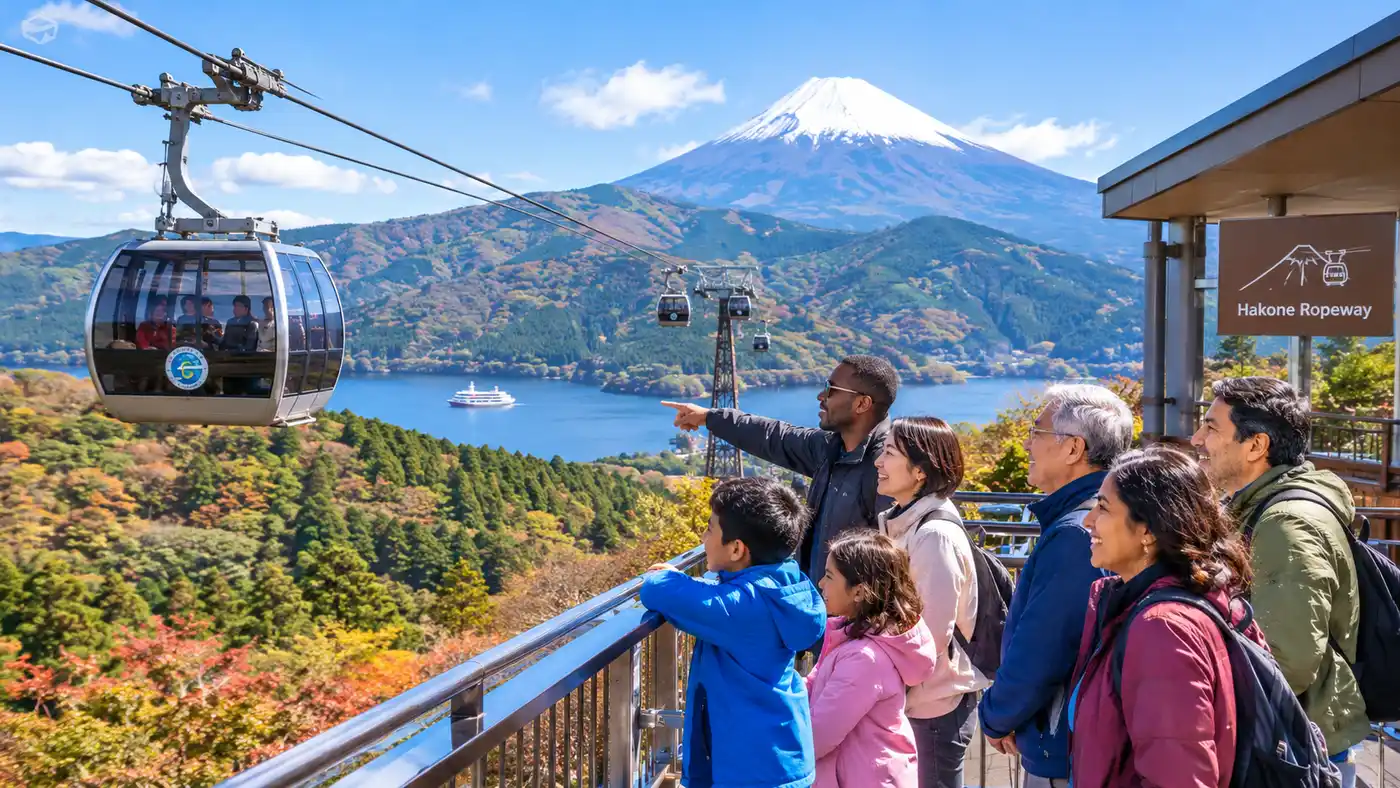
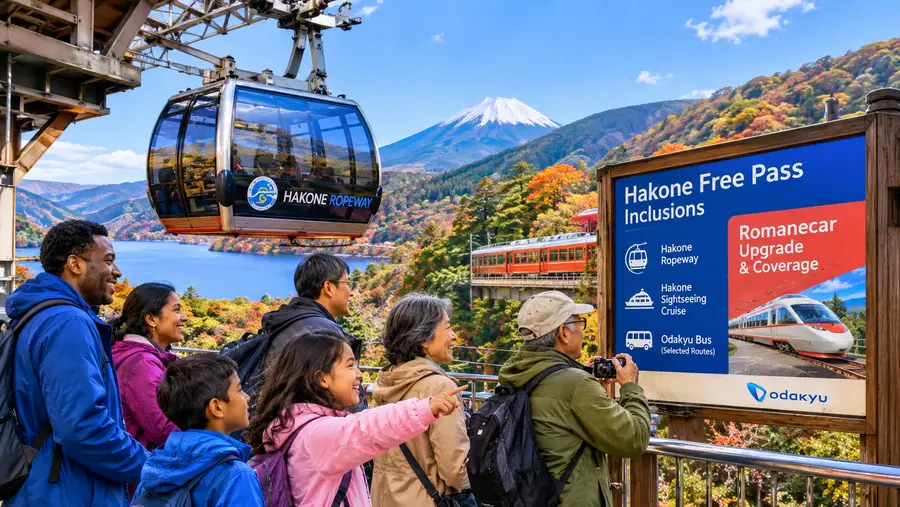
Hakone Free Pass Inclusions, Romancecar Upgrade and Coverage
Standing at the ticket machines in Shinjuku Station at 7:15 AM on a drizzly Tuesday, it is easy to feel overwhelmed by the transit maps. You want to see volcanic valleys and ride the pirate boat across Lake Ashi, but figuring out what does hakone free pass cover can feel like deciphering an origami manual. The Odakyu marketing pamphlet promises unlimited rides across mountain trains, cable cars, and ropeways. Yet there is always that nagging feeling your ticket will flash red at some quiet mountain turnstile.
I have done this mountain circuit four times across different seasons. Some trips went like clockwork, while on one chilly November afternoon I accidentally boarded an out-of-bounds bus toward Gotemba and had to sort out the fare difference with broken phrases and pocket coins. To help you avoid that hassle, this guide breaks down every transit network included in the ticket, how the famous Romancecar upgrade actually works, which tourist attractions offer discounts, and when skipping the pass makes more financial sense.
Book your hakone ropeway experience:
Transport Networks: What Does Hakone Free Pass Cover?
The ticket is primarily an all-inclusive transit pass. It grants unlimited rides on eight separate transport systems run by the Odakyu and Hakone Tozan groups. Once you step foot inside the Hakone region, you rarely need to pull out your wallet for travel fares.
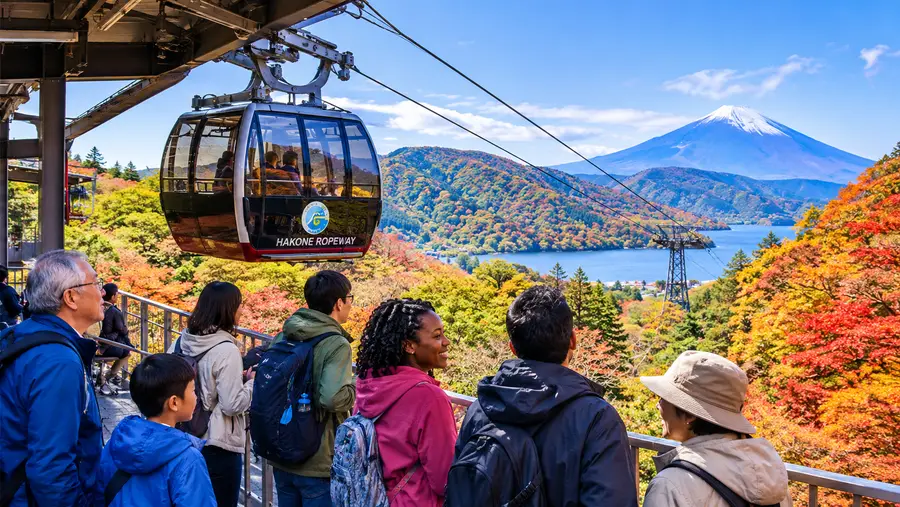
The journey into the hills begins with the Hakone Tozan Line. This mountain railway climbs from Odawara and Hakone-Yumoto up to Gora Station, reversing direction three times along steep zig-zag switchbacks. From Gora, the Hakone Tozan Cable Car takes over, pulling passengers up a steep 1.2-kilometer incline to Sounzan in roughly 10 minutes. At Sounzan, you step right into the Hakone Ropeway gondola, drifting over the sulfuric vents of the Owakudani valley toward Togendai on the northern shore of the lake. The pass covers this entire aerial lift, which would otherwise cost 2,500 yen for a round-trip ticket.
Pro tip: Grab a seat on the right side of the Hakone Tozan train when traveling uphill from Hakone-Yumoto for the clearest views down into the Hayakawa River gorge.
Once you reach Lake Ashi, you board the Hakone Sightseeing Cruise. These whimsical, multi-deck vessels styled like European pirate ships run between Togendai, Motohakone-ko, and Hakonemachi-ko. Standard cabin entry is entirely free with your pass. If you want access to the elevated first-class observation lounge, you pay a modest cash surcharge of 600 yen at the boarding pier.
On asphalt, the pass provides wide mobility. The orange-and-white Hakone Tozan Buses run across the entire national park, serving hot spring hamlets, scenic viewpoints, and mountain passes. You also get unlimited access to the tourist-focused Kanko Shisetsu-Meguri buses connecting Gora with local art galleries, the designated service areas of the Tokai Bus toward Mishima, and specific sections of the Odakyu Highway Bus between Gotemba and the lake.
Does the Hakone Free Pass Include Romance Car?
This is where first-time visitors run into trouble. The short answer is: no, not completely. Travelers constantly ask, does the hakone free pass include romance car? The answer lies in how Japanese train fares are structured.
The standard pass issued from Shinjuku covers what Odakyu calls the basic fare. That base ticket lets you ride regular commuter, rapid, and express trains between Tokyo and Odawara or Hakone-Yumoto without paying an extra coin. The Odakyu Romancecar, however, is a premier limited express service. Every seat is strictly reserved, and the carriages feature wide panoramic windows, luggage lockers, and quiet cabins. Because of those perks, Odakyu requires a limited express surcharge on top of standard base transit.
Note: Front-row observation seats on the red GSE and white VSE Romancecar models open for booking exactly 30 days ahead at 10:00 AM Japan time, and they routinely disappear within 60 seconds.
So, does hakone free pass cover romancecar seating? It covers the foundation, but you must purchase an express seat supplement. That surcharge costs 1,150 yen per adult each way between Shinjuku and Hakone-Yumoto. If you board the Romancecar holding only a basic Free Pass, the conductor will charge you the seat fee on board, assuming an empty seat is even available on that run.
Figuring out how to book romance car with hakone free pass is easy once you understand the Odakyu digital reservation system. Go online to the Odakyu e-Romancecar platform, select your travel date and preferred departure time, and choose the option to buy a Limited Express Ticket only. Do not purchase regular passenger tickets on that screen. Pay the 1,150 yen fee with your credit card, and save the digital seat confirmation to your phone. When you arrive at Shinjuku Station, simply tap or display your Hakone Free Pass at the automatic ticket barriers, walk to your track, and settle into your reserved seat.
Sightseeing Discounts: Open Air Museum, Onsen, and Shrines
Beyond transportation, the pass functions as a discount voucher at roughly 70 museums, botanical gardens, historic shrines, and thermal bathhouses. A frequent misconception is that entry to these landmarks is free. It is not. Instead, presenting your pass gets you a reduction of 100 to 500 yen off standard gate prices.
A classic question from art lovers is: does hakone free pass include open air museum tickets? The pass does not grant complimentary admission. Showing your card or digital pass at the entrance cuts 200 yen off the normal 1,600 yen adult ticket. Given that the Open Air Museum boasts world-class outdoor sculpture grounds and an indoor Picasso pavilion, shaving a bit off the gate fee is well worth the effort.
Other popular regional attractions offer similar savings across the park:
- Mishima Skywalk: save 200 yen on admission to the 400-meter suspension bridge with its sweeping views of Mount Fuji.
- Odawara Castle: receive roughly 10% off entry to the restored main keep and historical museum grounds.
- Hakone Kowakien Yunessun: get up to 500 yen off passes for the wine, green tea, and coffee novelty bathing zones.
- Hakone Glass Forest: knock 150 yen off the ticket price at this Venetian glass exhibition and landscaped garden.
- Hakone Shrine Treasure Hall: save 100 yen on access to the ancient religious artifacts displayed behind the main shrine grounds.
To claim these rate reductions, show your physical card or the active screen of your digital pass at the ticket booth before handing over any money. Ticket staff will not issue refunds if you present your pass after the transaction is complete.
Book your hakone ropeway experience:
How to Use Hakone Free Pass at Shinjuku Station and Beyond
Navigating Shinjuku Station can test the nerves of seasoned travelers. If you purchase a digital pass via the Odakyu EMot mobile site, make sure your phone battery is charged. When entering the Odakyu Line platforms at Shinjuku, look for the automated ticket gates fitted with dedicated optical scanners. Hold your generated QR code over the illuminated reader until the small gate doors swing open. If you hold a traditional paper pass, slide the magnetic card into the front slot of the standard turnstile and retrieve it as it pops up on the other side.
If you are connecting from a JR line using an IC card or a Japan Rail Pass, do not attempt to swipe out of JR and directly into the Odakyu concourse using a single reader. Tap your Suica or Pasmo at the central transfer barriers to clear your JR journey, then scan your Hakone Free Pass to access the Odakyu tracks.
Once you arrive in the mountains, using the pass feels second nature:
- On the Hakone Tozan Railway: flash your physical ticket to the stationmaster or scan your smartphone at the gate pedestals in Odawara, Yumoto, and Gora.
- At the Hakone Ropeway: walk toward the queue line and present your pass screen or cardboard ticket to the boarding attendant directing gondola cabins.
- Boarding Lake Ashi Cruises: proceed through the standard passenger queue at the pier, showing your pass to the staff member checking tickets at the gangway.
- Riding Hakone Tozan Buses: enter through the rear door without pulling a paper transit slip, then show the front of your pass to the driver as you step off through the front door.
Hakone Free Pass vs Suica or Buying Separate Tickets
Is buying the pass mandatory for every traveler? Honestly, no. If your only goal is to spend a quiet afternoon soaking in a Yumoto hot spring hotel and returning straight to Tokyo, paying individual fares with a Suica card is cheaper. Doing the full loop without a pass, however, becomes an expensive logistical headache.
Let us look at the standard out-of-pocket costs for a traveler completing the classic circular route over two days without any multi-ride ticket.
| Transit Leg or Attraction | Individual Cost (JPY) | With Hakone Free Pass |
|---|---|---|
| Odakyu Line (Shinjuku to Odawara return) | 1,840 | Covered |
| Hakone Tozan Railway (Odawara to Gora) | 680 | Covered |
| Hakone Tozan Cable Car (Gora to Sounzan) | 430 | Covered |
| Hakone Ropeway (Sounzan to Togendai) | 1,550 | Covered |
| Hakone Sightseeing Cruise (Togendai to Motohakone) | 1,200 | Covered |
| Hakone Tozan Bus (Motohakone to Odawara) | 1,000 | Covered |
| Total Out-of-Pocket Expenses | 6,700 | 6,500 (2-Day Pass) |
A 2-day pass departing Shinjuku costs 6,500 yen for an adult. Running the basic loop just once covers the purchase price. The moment you take an unplanned bus trip to your ryokan, detour toward the botanical wetlands, or board the pirate ship for a return crossing, the pass saves you 2,000 yen or more. It also spares you from scrounging for 100-yen coins every time you step off a crowded mountain bus.
If you already own an active Japan Rail Pass, pay attention here. The national JR Pass covers the Tokaido Shinkansen bullet train from Tokyo or Shinagawa down to Odawara Station in roughly 35 minutes. It does not cover a single mile of transit inside the Hakone mountain valley. For JR Pass holders, the smart move is buying the regional version of the Hakone Free Pass from Odawara Station for 5,000 yen. That way you skip paying Odakyu for track miles you can ride for free on the bullet train. For a full breakdown of pricing tiers and point-of-sale options, read our detailed Hakone Free Pass buying guide before departing Tokyo. To see how to sequence these connections smoothly, take a look at the classic Golden Loop route.
Frequently Asked Questions about what does hakone free pass cover
Does the Hakone Free Pass cover the Komagatake Ropeway?
No. The Komagatake Ropeway, which climbs from the lake shore up Mount Komagatake, is operated by the Prince Hotels Izuhakone network, not Odakyu. The pass does not pay for this ride, though showing your card at the ticket counter may yield a small admission discount.
What happens if the Hakone Ropeway closes due to weather or volcanic gases?
When high winds or elevated sulfur dioxide levels shut down the ropeway over Owakudani, Odakyu runs free substitute replacement buses between Sounzan and Togendai. Your Free Pass covers these emergency shuttles without any added fee or paperwork.
Can I purchase the Hakone Free Pass online before landing in Japan?
Yes. You can purchase the digital version through the Odakyu EMot mobile web portal up to one month in advance. The ticket remains stored in your smartphone browser, ready to activate on the morning of your departure from Tokyo.
Is the Hakone Free Pass valid for three days?
Odakyu sells two versions: a 2-day pass and a 3-day pass. The 3-day option costs only 500 yen more than the 2-day pass, making it an exceptional bargain if you plan to sleep two nights at a local hot spring inn.
Quick Reference
- Covers 8 regional transit systems, including ropeway and lake cruise
- Romancecar requires a separate 1,150 yen seat surcharge each way
- Offers 100 to 500 yen admission discounts at 70 local attractions
- Available as a 2-day or 3-day pass from Shinjuku or Odawara
- JR Pass holders should buy the Odawara version to save money
Book your hakone ropeway experience:
The Bottom Line
Navigating mountain travel in Japan is far less stressful when you do not have to think about train fares at every transfer. For almost anyone attempting the classic circuit through the sulfur vents and across Lake Ashi, the pass pays for itself before you even finish the loop. Grab the seat reservation for the Romancecar if you want a comfortable, direct ride from Shinjuku, make sure your phone has plenty of battery for the digital gates, and enjoy the mountain views.
Read more about hakone ropeway.